
Lawyers in Justice and Lawyer’s Injustice
LAW 258: A Travel Seminar on Professional Identity

What would you have done?

From 1942 to 1945, well-meaning government lawyers who knew the imprisonment of Japanese Americans was unnecessary and harmful nonetheless played important roles in that system. Many had plausible stories to tell about doing some good within a bad system. But the bad system couldn’t have run without them.
This one-credit pass/fail Fall Break seminar will take eight 3L and 2L students to a site in northwest Wyoming where nearly 11,000 Japanese Americans were unjustly imprisoned. Using the power of place, we will closely examine how lawyers came to play such integral — and sometimes ambiguous — roles in the tragedy.
In our own careers, none of us will help run a system of racial imprisonment. But all of us will face dilemmas that call upon us to decide who we want to be as professionals. Looking at the lives and choices of these lawyers from the 1940s, we will learn something about ourselves and the lawyers we want to be.
-

An Award-Winning Museum.
Our host is the Heart Mountain Interpretive Center, a multiple-award-winning museum at the site of the WWII Heart Mountain Relocation Center, a camp where the US government unjustly confined nearly 11,000 Japanese Americans between 1942 and 1945. Studying this chapter of legal history at the site where the injustice unfolded lends a special depth to our conversations about the roles lawyers played in creating, running, and defending the system of camps.
-

Meaningful Conversation in an Atmosphere of Trust.
Our readings will focus on the roles of lawyers at all levels of the government’s program for uprooting, confining, and dispersing Japanese Americans. We’ll look not only at how Justice Department lawyers defended the program in court, but also at how lawyers helped in the day-to-day administration of the camps and how lawyers challenged the the program’s legality. The small size of our group (8 students) and Professor Muller’s careful facilitation will ensure a safe environment for confronting hard questions about professional identity.
-
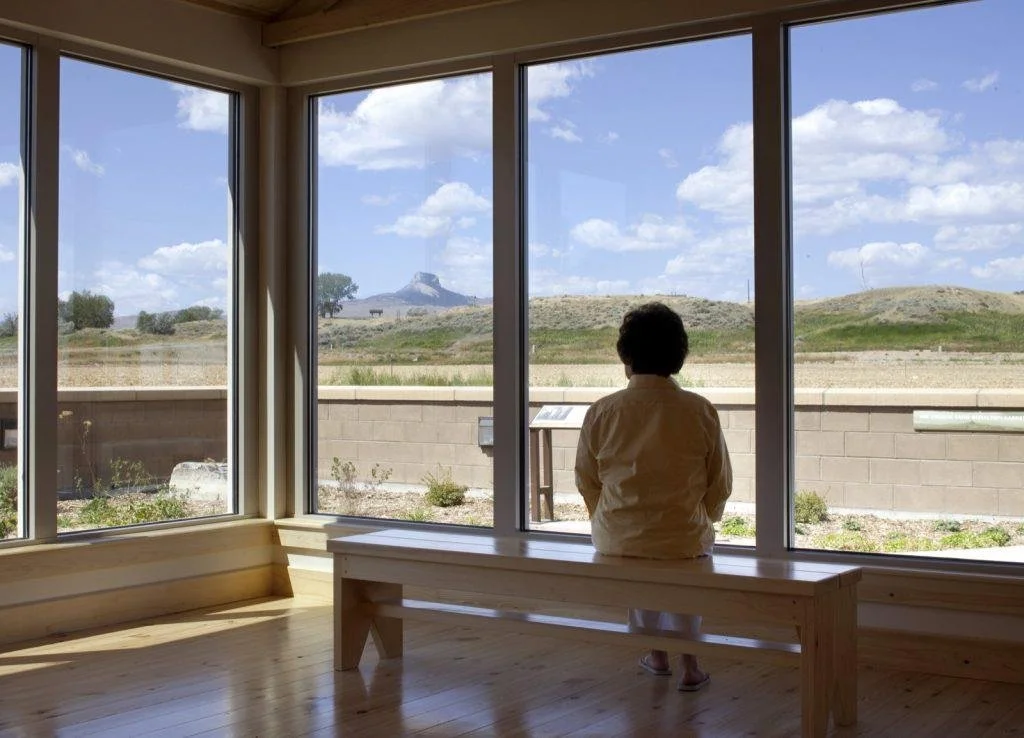
A Chance to Reflect.
An important part of your professional development is devoting yourself to reflection and self-care. Our program will include time each day for structured reflection and mindful absorption of the day’s themes and discoveries.
-

A Taste of the West.
We’ll stay in Cody, Wyoming, founded by “Buffalo Bill” Cody in 1896 and recently named the Best Small Town in the West by USA Today. Though we’ll be busy in our studies and conversations, there will be some time to take in the town’s atmosphere, dine in its restaurants, and maybe sneak in a quick visit to the Buffalo Bill Center of the West, a world-class museum of western art, natural and cultural history, and Native American history.
FAQs
-
If you are a rising 3L or 2L interested in deepening your appreciation of the power you’ll hold as a lawyer and strengthening your commitment to exercising your influence consistently with your values, this seminar is for you. The field of law you’re drawn to doesn’t matter — biglaw, small-firm or solo practice, criminal prosecution or defense, in-house counsel, public interest.
What matters is your willingness to engage openly and deeply with your fellow students about your identity as a professional. The group will be small and the quality of the experience will depend on each participant’s vocal and reflective participation.
-
The seminar is being taught by Professor Eric Muller. He has been studying and writing about the wartime removal and imprisonment of Japanese Americans for over 25 years and was instrumental in the creation of the Heart Mountain Interpretive Center and its exhibits. His most recent book, Lawyer Jailer Ally Foe, tells the stories of the lawyers who helped to run the Japanese American detention sites at Heart Mountain and two other places.
-
We will leave on Wednesday, October 16, and return on Sunday, October 20. This is UNC’s fall break.
-
You must complete this application form and submit it by Friday, March 29, at 5:00 pm. If you are selected to participate, you will be notified in advance of the April registration days for the coming academic year.
Registration is only for students willing to commit to participating. Registering for the course is a firm commitment to participate (barring illness). Travel arrangements will be made in each student’s name this spring, so cancellation will not be possible.
-
Professional Responsibility is a pre- or co-requisite.
-
We will meet for an informational and organizational session about two weeks before the trip. A preliminary writing assignment (a short essay) will be due a week before we depart for Wyoming. There will be daily writing exercises during the tip. Within a month of the trip’s end, students will be required to submit a final reflective essay.
-
The costs of airfare, accommodations, course-related local transportation in Wyoming, and three meals per day will be covered by the law school.
The only costs to the student will be certain reading materials and incidental expenses — transportation to RDU and back home, parking at RDU (if applicable), meals purchased while in transit to and from Wyoming, snacks and souvenirs while in Wyoming, and the like.
-
Breakfast will be available at our hotel in Cody. We will travel together the 15 miles or so to the Heart Mountain Interpretive Center, where each day will include site tours, group discussion sessions, and structured reflection. We will return to Cody for dinner together, followed by free time in the evening.
Where We’ll Be

